

In today’s information technology world, it makes even more sense to believe in its applicability to communication, user experience, product management, Agile software development, and operations.
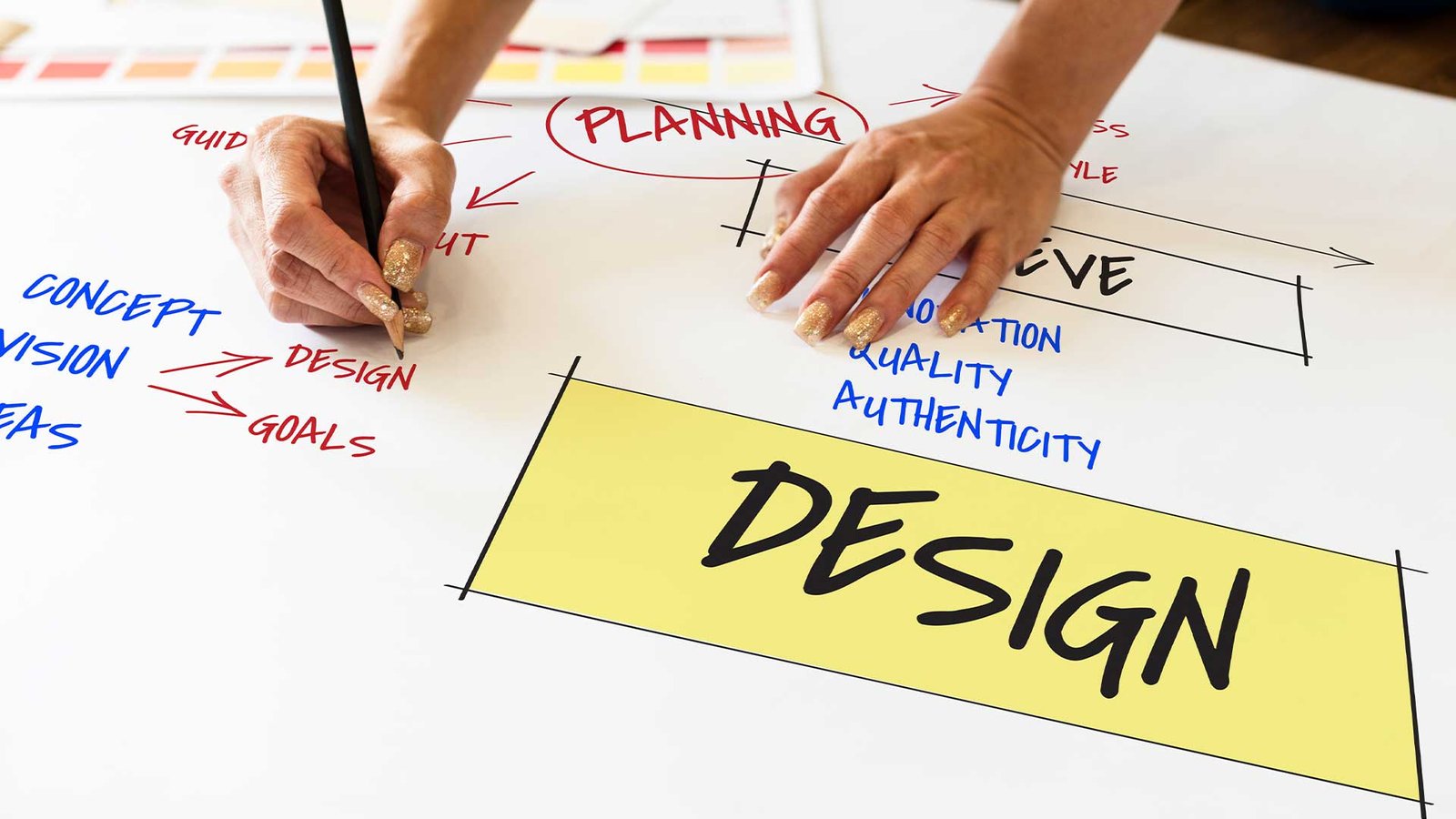
On the other hand, Design thinking as a simplified and innovative way of organizing work processes has had a significant impact. The intersection of desirability, viability, and feasibility is the birthplace of design thinking. The idea is to integrate the user needs, the technical possibilities, and the business success factors. As familiarized by IDEO, the steps in Design thinking include Empathise, Define, Ideate, Prototype, and Test. These steps, while providing room for innovation and creativity, ensure that the solutions are human-centred.
I was curious about exploring a blend of these two schools of thought in complex problem-solving. What I believe as the synergy appears in the ideation phase of Design thinking where teams discuss a multitude of solutions (divergence) but zero in on a particular one (convergence) and proceed from there. While design thinking helps the team overcome any biases that could impact the solution’s potential, the law of parsimony ensures that unnecessary assumptions are out of the way.
As we set out on the path of problem-solving, it is important to remind ourselves of the goals at each phase. If there is more than one problem, what is it that we are addressing first? If there is more than one solution for the problem, what is it that we are choosing? Ruthless prioritization in such cases could be done by using Ockham’s razor technique.
The theoretical law that the correct solution is the one that has minimal assumptions could aid in the solution decision. This is particularly helpful in cases where more than one solution carries the same merit/ weight. Given that the principle merely states that the odds of the simplistic solution being the right one is high, there is room for experimentation which is a real need for product agility.
#Management #Outcome #Startwithwhy #Experience #Owner #Learning #Knowledge #Wisdom #Goodtogreat #Expertise #Practitioner #ProdMan #ProductManagement #ProductManager #PM #PO #UX #Productthinking #ProMan #ProdWorld #LikeaPro #DesignThinking #DT #Parsimony #Occam


